Shopify Custom Bundle Apps: The Engineering Blueprint for Doubling Average Order Value
Datronix · October 2026 · 10 min read
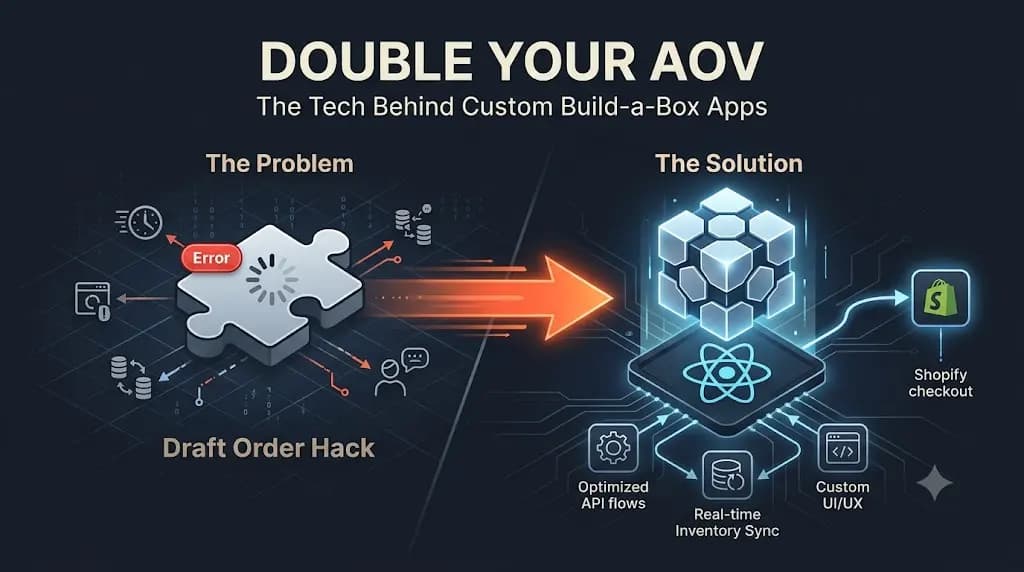
If you are trapped in this technical bottleneck, you are not alone. Off-the-shelf software is designed for generic use cases, not complex, branded merchandising. To scale beyond these limitations and unlock massive revenue growth, elite brands are investing in bespoke Shopify custom bundle apps.
It is a scenario playing out at the highest levels of digital retail. You are the Director of E-commerce for a scaling Direct-to-Consumer (DTC) brand. Your marketing team has devised a brilliant strategy to double the Average Order Value (AOV): a “Build Your Own Box” experience.
Whether it is mixing and matching 10 custom meal prep containers, building a personalized skincare routine, or configuring a custom skateboard from the deck down to the bearings, the business logic is sound. Customers love personalization, and bundling drastically increases basket size.
You hand the requirements to your development team. Two weeks later, the project is dead in the water.
Your developers explain that Shopify has a hard limit of 100 variants per product and a maximum of 3 options (e.g., Size, Color, Material). When they tried to install a generic $29/month “Bundle App” from the Shopify App Store, it completely destroyed the user experience. The app injected heavy JavaScript that tanked your mobile load speed, the cart glitched when users tried to edit their box, and the automated bundle discounts broke your Meta Ads tracking pixel.
Here is the definitive, CTO-level engineering playbook on why generic bundle plugins destroy enterprise storefronts, and how Datronix Tech utilizes React, the Shopify Storefront API, and custom architecture to build flawless, 3D-interactive product configurators.
The Bleeding Neck: Why Generic Bundle Apps Fail at Scale
To understand the cure, we must deeply analyze the disease. Why do the top-rated bundle apps in the Shopify ecosystem fail when applied to complex, high-volume storefronts?
1. The “Draft Order” Checkout Hack
Historically, to create a complex bundle with a dynamic discount (e.g., “Add 5 items, get 15% off”), generic apps had to use a highly fragile workaround known as the “Draft Order Hack.”
When the user clicks “Checkout,” the app intercepts the cart. It hides the standard Shopify checkout, sends the cart data to an external server, calculates the discount, creates a “Draft Order” via the Shopify backend, and redirects the user to a custom checkout URL.
This is an architectural nightmare. First, it causes a highly visible 2-3 second delay where the screen goes blank or shows a spinning wheel, drastically increasing cart abandonment. Second, this redirect completely bypasses modern Shopify Checkout Extensibility. It routinely breaks Google Analytics 4 (GA4) attribution, severs your Server-Side Tracking for Meta Ads, and renders post-purchase upsell apps useless.
2. The DOM Bloat and Performance Penalty
Visual “Build-a-Box” experiences require complex, multi-step user interfaces. When you use a generic app, it attempts to forcefully inject its own styling and HTML into your existing theme using clunky DOM (Document Object Model) manipulation.
As we explored in our teardown of Shopify mobile theme speed optimization, every external script that manipulates the DOM on page load destroys your Time to First Byte (TTFB) and First Contentful Paint (FCP). Your beautiful custom theme suddenly feels like a sluggish, Frankenstein application, and mobile users bounce before the bundle interface even finishes rendering.
3. The Inventory Synchronization Disaster
If a customer buys a “Custom Skateboard Bundle,” they are technically buying one overarching product. But operationally, your warehouse needs to pick one specific deck, two specific trucks, four specific wheels, and a sheet of grip tape.
Generic bundle apps often struggle with “Exploded Inventory.” They fail to accurately decrement the raw materials from your Shopify backend. This leads to massive overselling events during flash sales, where you sell 500 bundles but realize you only had 100 sets of bearings in the warehouse.
The Tourniquet: Architecting Bespoke Shopify Custom Bundle Apps
The solution to these operational nightmares is to stop relying on heavy, monolithic third-party plugins. Instead, you must decouple the user experience from the Shopify backend by building Shopify custom bundle apps.
At Datronix Tech, we treat complex bundles not as simple theme tweaks, but as standalone software engineering projects. We bypass standard Liquid templates and build dynamic, lightning-fast Single Page Applications (SPAs) directly on your storefront.
Here is the exact technical blueprint of a high-converting, enterprise-grade product configurator.
Pillar 1: The React / Next.js Visual Frontend
The core of a “Build-a-Box” experience is the user interface. It must be visual, instantaneous, and highly interactive.
Instead of writing complex, messy jQuery inside a Liquid file, we engineer a dedicated React component.
- State Management: We utilize modern state management libraries (like Zustand or Redux) to track the customer’s box in real-time. As the customer clicks to add a meal or a cosmetic item to their bundle, the “Box UI” updates instantly, displaying a visual progress bar (“4/6 items selected to unlock 20% off!”). There are zero page reloads.
- 3D & AR Configuration: For high-ticket items like custom furniture, bicycles, or apparel, a simple 2D image is not enough. Because we are building a custom React application, we can seamlessly integrate WebGL libraries like Three.js. The customer can rotate their product in full 3D, changing colors and materials in real-time, drastically increasing buyer confidence and conversion rates.
Pillar 2: Headless Data Fetching via the Storefront API
How does our custom React app know what products are in stock without relying on slow Liquid loops? We utilize GraphQL and the Shopify Storefront API.
When the user lands on the configurator page, our application makes a single, highly optimized GraphQL query to Shopify’s servers. It pulls down the exact product variants, images, live inventory levels, and pricing data required for the bundle.
Because we fetch this data asynchronously, the initial page loads instantly. If a specific color of a product sells out while the user is building their box, the Storefront API updates the React state in real-time, greying out the out-of-stock option and preventing checkout errors. (Learn more about the architectural power of this API via Shopify’s official developer documentation).
Pillar 3: Flawless Cart Integration and Line Item Properties
When the customer finishes building their 15-item custom box and clicks “Add to Cart,” we do not use the fragile “Draft Order” hack.
Instead, we format a precise JSON payload and send it directly to Shopify’s native Cart API. We utilize Line Item Properties—hidden data fields attached to the cart items.
We structure the cart so that the overarching “Bundle” is the parent item, and the individual components (the wheels, the meals, the specific colors) are attached as hidden properties. This allows your warehouse fulfillment software (like ShipStation or a custom ERP) to read the exact components required to fulfill the order, ensuring perfect inventory synchronization and eliminating picking errors.
Pillar 4: Secure Server-Side Discounting (Shopify Functions)
The most critical part of a bundle is the pricing logic. If the box costs $100 instead of the standard $150, how do we apply that discount securely?
Historically, we had to rely on Shopify Scripts (which are now deprecated). Today, we engineer custom Shopify Functions.
Shopify Functions allow us to inject custom Rust or WebAssembly code directly into Shopify’s backend checkout logic. When the user navigates to the checkout, our custom Function reads the cart. If it detects the specific Line Item Properties of a completed bundle, it dynamically recalculates the price on Shopify’s servers.
Because this happens natively on the backend, there is no checkout redirect, no screen flickering, and no risk of a savvy user manipulating JavaScript in their browser to steal a discount. It is 100% secure, and 100% compatible with your tracking pixels and post-purchase upsells.
The Business Case: The ROI of Custom Configuration
Developing Shopify custom bundle apps is an intensive engineering process that requires a significant initial capital expenditure (CapEx). A bespoke React configurator typically costs between $15,000 and $45,000 depending on 3D integration and ERP complexity.
However, for a store doing over $5M in annual revenue, the Return on Investment (ROI) is staggering and rapidly compounds.
1. The AOV Multiplier (Gamification)
A well-engineered configurator gamifies the shopping experience. By visually showing a user that they are “only 1 item away from a free gift” or “1 item away from unlocking the Master Tier Box,” you drastically increase the Average Order Value. Brands that migrate from standard product pages to visual “Build-a-Box” funnels frequently see a 40% to 100% increase in AOV within the first month.
2. Eliminating Development Debt and Support Tickets
Generic bundle apps break constantly. Every time Shopify updates its core theme architecture, third-party DOM-manipulation apps glitch. Your customer support team is flooded with emails saying, “I can’t check out.” By owning your proprietary custom app, you eliminate this technical debt. The application is isolated, stable, and maintained by your engineering partners, ensuring zero downtime during critical Q4 sales.
3. Elevating Brand Equity
In 2026, consumers judge the quality of your physical product by the quality of your digital experience. If your $2,000 custom bicycle configurator looks like a cheap, clunky web form from 2012, brand trust evaporates. A lightning-fast, 3D-interactive React application signals to the market that you are a premium, elite brand. It turns the act of buying into an immersive brand experience.
Strategic Rollout: How We Build It
At Datronix Tech, we do not believe in coding in a vacuum. Deploying complex Shopify custom bundle apps requires a strict, Agile engineering process.
- Phase 1: Architecture Mapping. We do not start with UI design; we start with data. How does your warehouse pick these items? How does your ERP track raw materials? We design the data payload and Line Item Property structure first to ensure operational perfection.
- Phase 2: React Prototyping. We build a headless version of the configurator locally, mocking the Storefront API data. This allows your marketing team to test the user flow and gamification logic before we touch your live Shopify theme.
- Phase 3: Shopify Functions Deployment. We write and deploy the secure backend discounting logic, running thousands of automated tests to ensure users cannot exploit the cart pricing.
- Phase 4: Seamless Theme Injection. We compile the React application and inject it seamlessly into your existing Shopify architecture, ensuring zero layout shifts and preserving your Core Web Vitals.
Conclusion: Stop Forcing Generic Tools to do Custom Work
Your brand is unique. Your product is unique. If you attempt to force your unique merchandising strategy into a generic, $29/month plugin, your growth will permanently stagnate.
You cannot scale an enterprise e-commerce operation on fragile workarounds and checkout hacks. By investing in a bespoke, React-driven product configurator, you take total control over your user experience, secure your checkout flow, and turn your storefront into a high-speed revenue engine.
It is time to stop apologizing for broken carts and start building the buying experience your customers deserve.
(Note: When scoping custom Shopify applications, headless commerce architectures, and API middleware, all Datronix Tech B2B service proposals natively include the requisite 18% GST charge, ensuring complete financial transparency from the initial audit to final deployment).
Is complex product logic breaking your Shopify store?
👉 Book a Custom Shopify App Consultation. Stop fighting with generic plugins. Tell us the exact bundle logic, mixing rules, or 3D configuration you cannot get to work. Our senior engineers will map out a secure, high-performance React architecture to make it a reality. Schedule your strategic technical review today and let us build the engine that doubles your AOV.
Related Posts
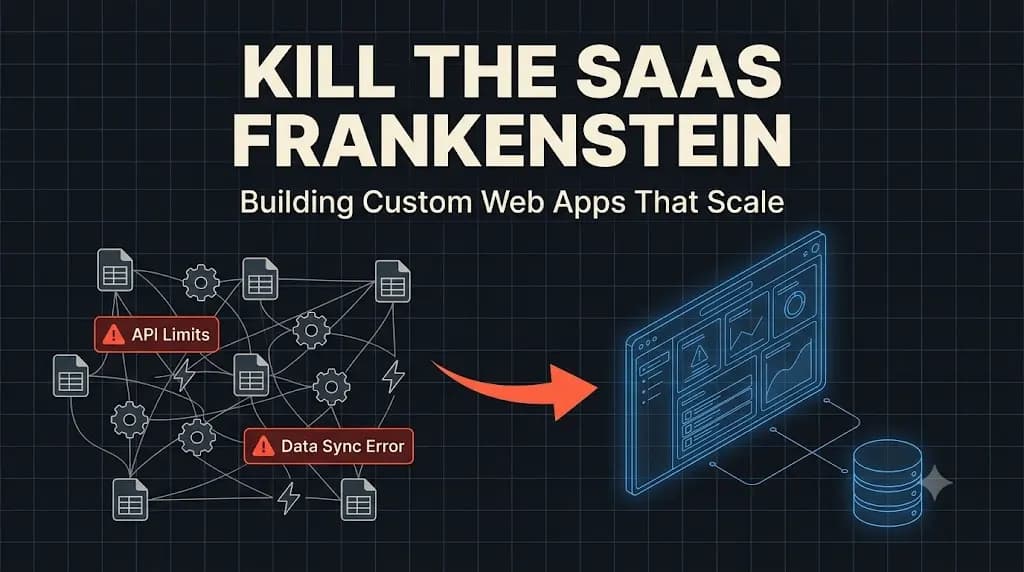
Building Custom Web Apps: The Enterprise Cure for the “SaaS Frankenstein”
Building custom web apps is no longer a luxury reserved for Fortune 500 companies; it is an absolute survival requirement for mid-market businesses. It is Wednesday at 10:00 AM. Your Operations Director is panicking. A critical Zapier workflow just silently failed because an API key expired. As a result, 50 high-ticket customer orders were logged […]
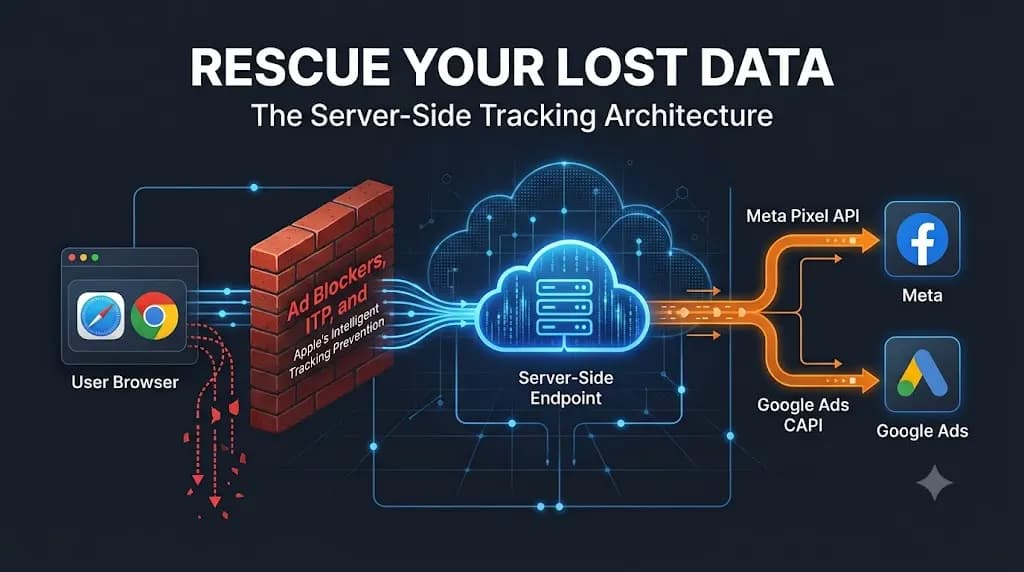
The Death of the Pixel: How Server-Side Tracking 2026 Architecture Rescues Meta and Google Ads Data
To survive and scale in the current digital landscape, you must implement Server-Side Tracking 2026 architectures. Here is the definitive, elite engineering deep-dive into why client-side pixels are dead, how we architect Google Tag Manager Server-Side (sGTM) containers, and how our developers rescue your lost conversion data to instantly restore your Return on Ad Spend […]