Webflow for Marketing, React for the Product: The Ultimate Split Tech Stack Architecture for SaaS Growth
Datronix · September 2026 · 10 min read
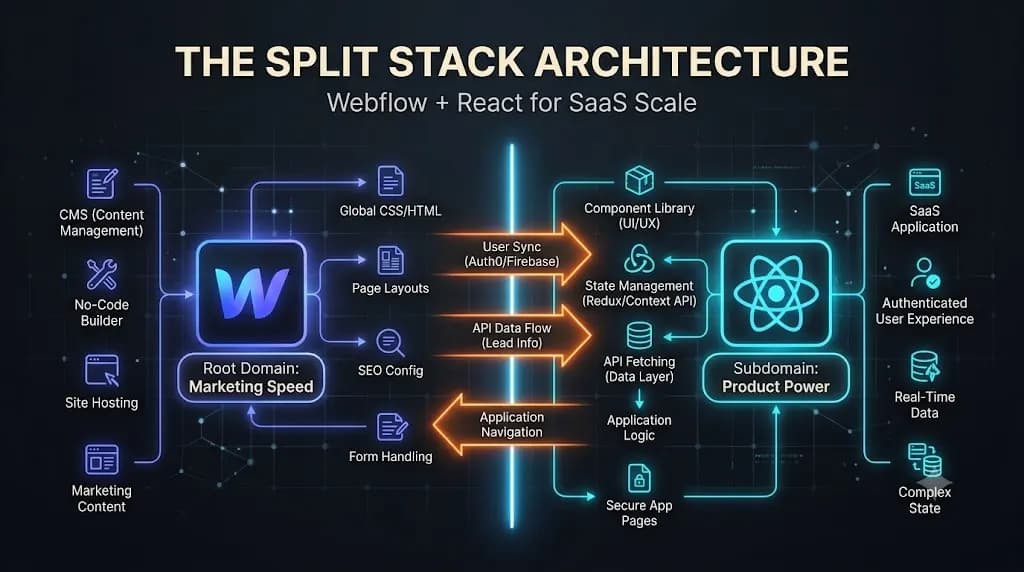
To scale aggressively in 2026, you must decouple your marketing engine from your product engine. This deep-dive technical guide explores the ultimate split tech stack architecture: utilizing Webflow for the marketing site and React/Next.js for the core product, and how this separation unlocks unprecedented velocity for both your marketing and engineering teams.
It is a Tuesday morning. Your marketing team just finalized a brilliant, highly topical campaign designed to capitalize on a competitor’s recent PR disaster. They have the copy, they have the graphics, and they are ready to launch a dedicated landing page to capture the influx of leads.
The Chief Marketing Officer (CMO) sends the assets to the engineering team, expecting the page to be live by noon.
The Chief Technology Officer (CTO) replies: “We are in the middle of a two-week sprint to refactor the core application database. We can add this landing page to the backlog. The earliest we can deploy it is three weeks from now.”
The marketing campaign dies before it even begins.
If this scenario sounds familiar, your SaaS company is suffering from one of the most common, yet catastrophic, architectural mistakes in the tech industry: The Monolithic Codebase Trap. You have hardcoded your public-facing marketing website into the same complex React or Next.js repository as your actual software product.
The Bleeding Neck: Why the Monolith is Killing Your Growth
To understand the cure, we must first diagnose the disease. Why do so many startups build their website and their app in the same codebase?
Usually, it happens out of early-stage convenience. When a startup is just three founders in a room, the lead engineer spins up a React app. They build the login screen, the dashboard, and the core functionality. When it is time to launch, they simply add a /home, /pricing, and /about route to that exact same React application.
In the seed stage, this is fine. But as the company raises Series A or B funding and begins to scale, this architecture becomes a massive operational bottleneck.
1. The Marketing Bottleneck
Marketing is a discipline of speed, iteration, and testing. To lower Customer Acquisition Costs (CAC), marketers must run relentless A/B tests, swap out headlines, spin up dynamic landing pages for specific Google Ads, and optimize metadata for technical SEO.
When the marketing site is hardcoded in React, every single one of these actions requires a developer. A marketer cannot simply change a typo; they have to create a Jira ticket, wait for a developer to write the code, wait for code review, wait for the QA team to test it, and wait for the next production deployment.
This friction paralyzes growth. Marketing teams stop testing because it is “too hard to get engineering resources.”
2. The Engineering Drain (Wasting CapEx)
From the CTO’s perspective, the monolith is equally destructive. Senior Software Engineers cost upwards of $150,000 to $200,000 a year. Their time is the most valuable capital expenditure your company has.
Every hour a senior engineer spends changing a hex code on a pricing button, adjusting the padding on a hero image, or fixing a typo on the privacy policy page is an hour they are not spending building the core, revenue-generating features of your software.
You are effectively paying enterprise software engineering rates for basic content entry. This leads to severe developer burnout and massive financial waste.
The Tourniquet: Designing a Split Tech Stack Architecture
The solution to this organizational friction is a structural intervention. You must draw a hard line between the “Front of House” (Marketing) and the “Back of House” (The Product).
At Datronix Tech, when we audit scaling SaaS companies, our immediate recommendation is to implement a split tech stack architecture. We migrate the public-facing marketing site to a visual, low-code powerhouse like Webflow, and we isolate the complex web application on a modern JavaScript framework like React or Next.js.
Here is how the architecture is technically structured.
Component 1: The Marketing Engine (Webflow on the Root Domain)
Your root domain (e.g., www.yoursaas.com) becomes the exclusive domain of the marketing team. We build this entirely in Webflow.
Webflow is not a basic template builder; it is a professional, visual development platform that generates clean, semantic HTML, CSS, and JavaScript.
Why Webflow for the Root Domain?
- Total Marketing Autonomy: The marketing team can log into the Webflow Editor, change copy, swap images, and publish instantly without writing a single line of code or asking permission from engineering.
- Programmatic SEO & CMS: Webflow’s native CMS allows marketers to spin up hundreds of programmatic SEO pages (e.g., “Best CRM for Dentists,” “Best CRM for Plumbers”) effortlessly.
- World-Class Performance: Webflow sites are hosted on Fastly’s global CDN and AWS, ensuring lightning-fast Time to First Byte (TTFB), which is a critical ranking factor for modern SEO strategies in 2026.
Component 2: The Product Engine (React on the Subdomain)
Your actual software product is moved to a subdomain (e.g., app.yoursaas.com or dashboard.yoursaas.com). This is where your engineering team lives.
We utilize React, Next.js, or the MERN stack for this environment.
Why React for the Subdomain?
- Complex State Management: Software applications require complex state handling, real-time data fetching, and deep database integrations. Visual builders like Webflow cannot handle this; you need a robust framework like React.
- Security & Authentication: Your product handles sensitive user data, payment processing, and proprietary logic. It must be heavily secured behind robust authentication protocols (like OAuth or JWTs).
- Engineering Focus: By moving the product to a subdomain, your engineers are completely insulated from marketing requests. They can focus purely on product velocity, deploying complex custom software development without worrying about accidentally breaking the marketing homepage.
(If you are considering outsourcing this product development, read our guide: Is Outsourced Web Development Reliable for Startups?)
The ROI: 5 Proven Benefits of a Split Tech Stack Architecture
Transitioning to a split tech stack architecture is not just an IT upgrade; it is a strategic business maneuver that delivers massive Return on Investment (ROI) across the entire organization.
1. Unblocking Marketing Velocity
When the marketing team owns the Webflow instance, their speed to market increases by 10x. If a competitor drops their pricing on a Tuesday, your marketing team can launch a new comparison landing page by Tuesday afternoon. They can integrate directly with HubSpot, Marketo, or Google Analytics without needing a developer to inject the scripts. This agility directly correlates to higher conversion rates and lower acquisition costs.
2. Reclaiming Engineering Capital
By removing marketing tasks from the engineering sprint, you instantly reclaim 15% to 20% of your development bandwidth. Your engineers will be happier, retention rates will improve, and your product roadmap will accelerate. The migration pays for itself simply by allowing your $150k/year engineers to actually do $150k/year engineering work.
3. Fault Isolation and Enhanced Security
In a monolithic codebase, if a marketing intern accidentally pushes a broken piece of code to the homepage, the entire application could crash, locking paying users out of the software.
In a split tech stack architecture, the systems are decoupled. If the Webflow marketing site experiences an issue, the app.yoursaas.com React application remains 100% online and unaffected. Your paying customers experience zero downtime. Conversely, if your product pushes a bad backend update, your marketing site stays up to capture leads.
4. Resolving the SEO vs. SPA Conflict
React Single Page Applications (SPAs) are historically terrible for Search Engine Optimization. Because React relies on client-side JavaScript to render content, Google’s crawlers often struggle to index the pages efficiently. (While frameworks like Next.js solve this with Server-Side Rendering, it adds immense architectural overhead).
By moving the marketing pages to Webflow, you serve Google pure, static, perfectly structured HTML. This is exactly what search engines prefer. You get the incredible SEO benefits of a static site for your marketing, and the dynamic power of an SPA for your actual product. (Learn more about Google’s indexing guidelines on the Google Search Central Blog).
5. Independent Deployment Pipelines
Your marketing team might want to deploy website updates 5 times a day. Your engineering team might run strict, rigorous CI/CD pipelines that only deploy to production once a week. A split stack allows both teams to operate on the deployment schedule that best fits their risk profile and operational needs.
The Technical Playbook: Executing the Handoff
The biggest concern CTOs have when adopting a split tech stack architecture is the “Handoff.” If the marketing site looks completely different from the app, or if the login process is clunky, the user experience suffers.
Here is how our senior engineering team at Datronix Tech executes a seamless bridge between Webflow and React.
Step 1: Unifying the Design System
Before we migrate, we audit your brand’s UI/UX. We establish a strict design system (typography, spacing, color hexes, button states) in Figma.
- In Webflow: We build the marketing site using Client-First or a strict CSS variable system to match the Figma file exactly.
- In React: We build the application using Tailwind CSS or Styled Components, utilizing the exact same variables. Even though the user is crossing from Webflow to a React app, the visual transition is completely indistinguishable.
Step 2: The Authentication Bridge
When a user clicks “Log In” on the Webflow site (www.yoursaas.com), they need to be passed seamlessly to the React app (app.yoursaas.com).
We implement a clean redirection strategy. The “Log In” button on Webflow is simply a hyperlink pointing to app.yoursaas.com/login. If the user is already authenticated (via a secure JWT token stored in a cross-domain cookie), the React app instantly recognizes them and routes them directly to the internal dashboard, bypassing the login screen entirely. (For deeper insights on secure cross-domain authentication, review the Auth0 Documentation on SSO).
Step 3: Reverse Proxy for Root Domain Apps (Optional)
While the app.subdomain route is the industry standard (used by Slack, Notion, and HubSpot), some enterprise clients demand that their app lives on the root domain (e.g., www.yoursaas.com/app).
If this is a strict requirement, we utilize a Reverse Proxy (like Cloudflare Workers or AWS CloudFront). The user visits the root domain. The reverse proxy acts as a traffic cop: if the URL path is /blog or /pricing, it fetches the page from Webflow. If the URL path is /app or /dashboard, it fetches the application from your React/Node.js servers. This provides a unified URL structure while maintaining the split tech stack architecture on the backend.
Conclusion: Stop Sacrificing Speed for Structure
A scaling SaaS company cannot afford to compromise. Marketing needs total autonomy and lightning-fast deployment speeds. Engineering needs strict version control, robust security, and deep focus on the product roadmap.
When you force both teams to share a monolithic codebase, both teams lose.
By migrating to a split tech stack architecture—empowering your marketing team with Webflow and your engineering team with React—you eliminate organizational bottlenecks. You transform your public website into a high-performance lead generation engine while safeguarding the integrity of your core software product.
It is time to free your developers from marketing updates.
(Note: When scoping custom architecture migrations, all Datronix Tech B2B service proposals natively include the requisite 18% GST charge, ensuring complete financial transparency from the initial audit to final deployment).
Is your engineering team wasting hours on website copy updates?
👉 Get a Tech-Stack Migration Roadmap. Contact Datronix Tech for an Enterprise Architecture Audit. We will review your monolithic codebase, map out a seamless Webflow/React split, and show you exactly how much engineering capital you can reclaim. Schedule your strategic technical review today and let us build the foundation for your next stage of scale.
Related Posts
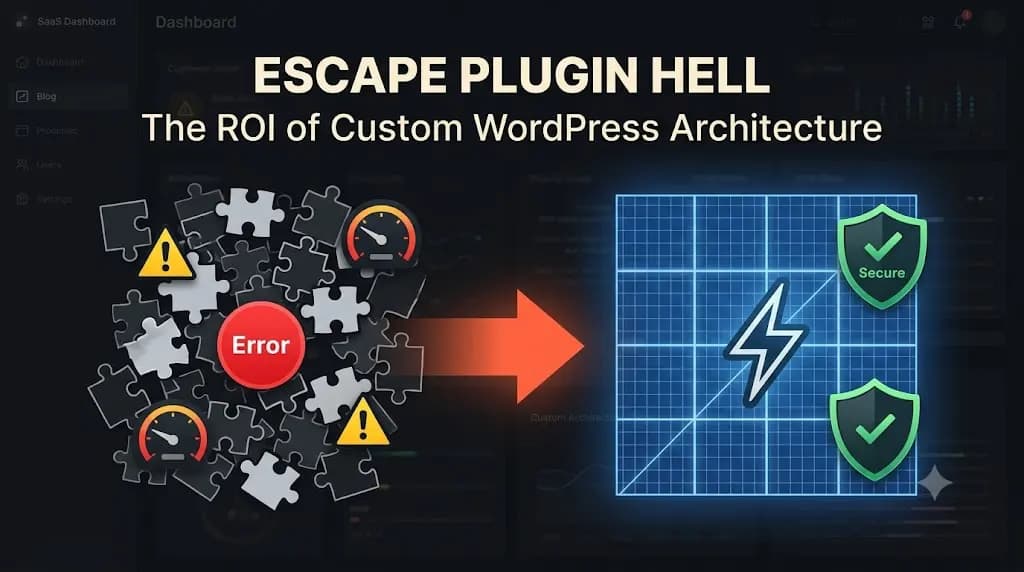
Escaping “Plugin Hell”: How Custom WordPress Development Rescues Slow, Hacked Websites
If you want to scale your digital presence in 2026, you cannot rely on DIY page builders. You need a structural intervention. Here is the technical deep-dive into why bloated WordPress sites fail, and how professional custom WordPress development provides the ultimate ROI by replacing fragile plugins with a bulletproof, high-performance architecture. You run a […]
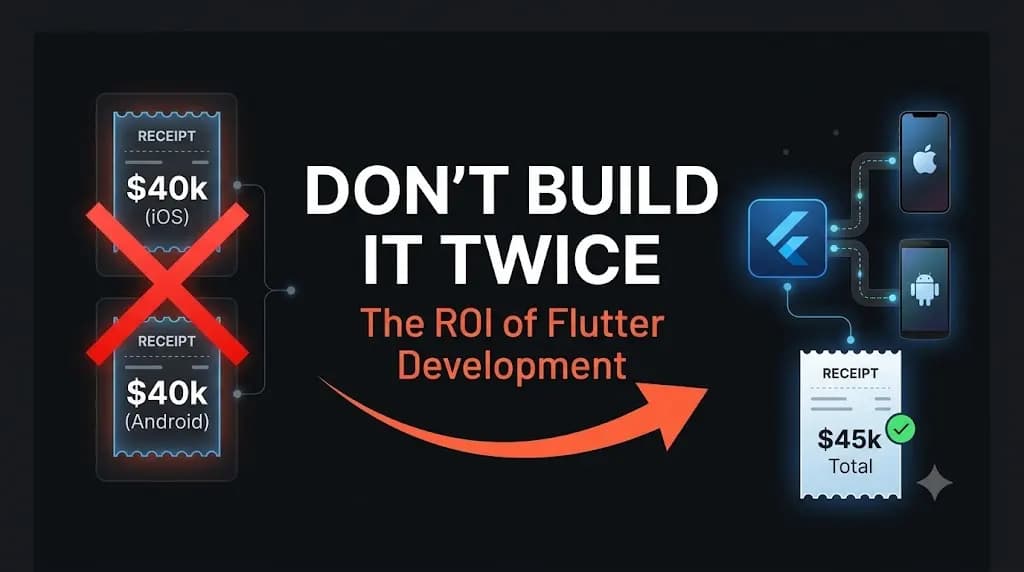
Don’t Pay for Two Codebases: The Cost-Saving Power of Flutter Mobile App Development
The good news? You do not have to pay for two codebases anymore. The industry standard has shifted, and Flutter mobile app development is the tourniquet that stops the bleeding, allowing you to build high-performance apps for a fraction of the traditional native cost. You finally have the funding, or the revenue, to build that […]