Don’t Pay for Two Codebases: The Cost-Saving Power of Flutter Mobile App Development
Datronix · September 2026 · 4 min read
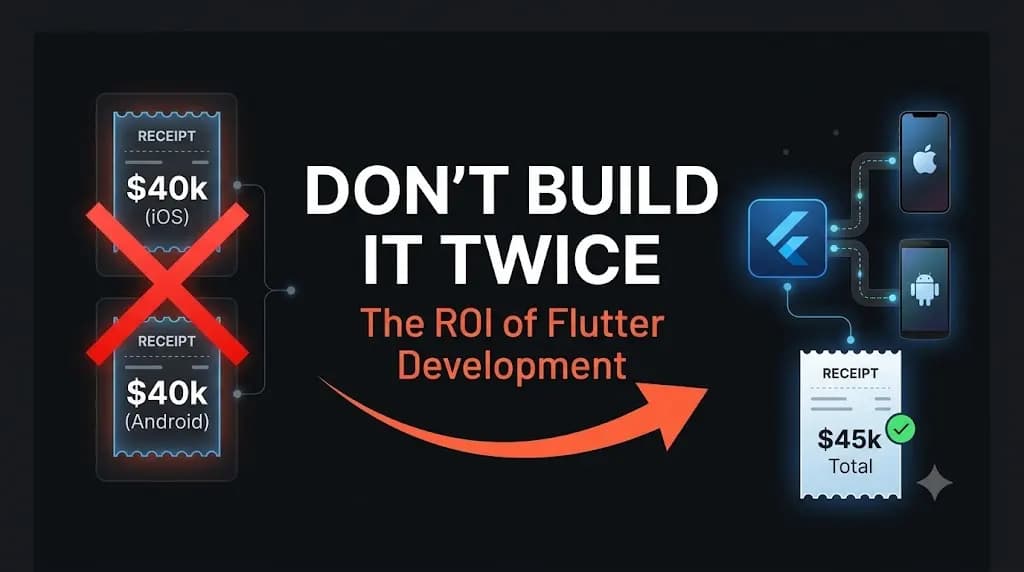
The good news? You do not have to pay for two codebases anymore. The industry standard has shifted, and Flutter mobile app development is the tourniquet that stops the bleeding, allowing you to build high-performance apps for a fraction of the traditional native cost.
You finally have the funding, or the revenue, to build that mobile application. You take your product roadmap to a traditional development agency, and they hand you a quote that makes your jaw drop: $80,000.
When you ask why it’s so expensive, the agency explains that to launch on both Apple and Google, they have to build the app twice. They need an iOS developer to write it in Swift, and an Android developer to write it in Kotlin. Two separate codebases, two separate QA processes, and double the long-term maintenance costs.
For a mid-market brand or a Series A startup, this is a massive, unnecessary bleeding of capital.
The Problem with the “Native App” Tax
When scoping how to choose the right tech stack, many technical founders still default to traditional native development because they fear “hybrid” apps will feel slow and clunky.
Historically, they were right. Older cross-platform frameworks often felt sluggish because they relied on heavy “bridges” to communicate with the phone’s hardware.
But that fear leads to the Native App Tax:
- Double the CapEx: Paying two engineering teams to build the exact same features.
- Slower Time to Market: Managing two separate deployment pipelines delays your launch.
- Fragmented UX: If the Android team works faster than the iOS team, your users get different feature sets depending on their device.
The Solution: Why Flutter is Different
Flutter, created by Google, fundamentally changes the architecture of cross-platform apps.
Instead of translating code through a slow bridge, Flutter mobile app development compiles directly to native machine code. It bypasses the phone’s native UI components entirely and draws every single pixel on the screen using its own high-performance rendering engine (Skia/Impeller).
This means you get a single codebase (written in Dart) that deploys to both the Apple App Store and the Google Play Store, running at a buttery smooth 60 or 120 frames per second.
4 Proven Ways Flutter Mobile App Development Cuts Costs
If you are a CTO or Founder evaluating your mobile strategy in 2026, here is why Flutter is the smartest financial decision you can make.
1. The Single Codebase Advantage
By utilizing Flutter mobile app development, you immediately eliminate the need for two siloed engineering teams. A single Flutter developer (or team) writes the logic and UI once. This effectively cuts your initial development CapEx by up to 40-50% compared to traditional native builds.
2. Uncompromising Performance
Because Flutter compiles down to native ARM code, it doesn’t suffer the performance bottlenecks of JavaScript-heavy frameworks. Whether you are building a complex FinTech dashboard or a smooth e-commerce catalog, the user experience is indistinguishable from an app built in Swift or Kotlin.
3. Radical UI Consistency
With native development, making a button look identical on a Samsung Galaxy and an iPhone 16 requires meticulous tweaking by both teams. Because Flutter controls every pixel on the screen, your brand’s UI is guaranteed to look exactly the same on every device, eliminating hundreds of hours of QA testing. (This is a massive advantage over React Native’s UI rendering logic).
4. Lightning-Fast Maintenance
Finding a bug on a Friday afternoon is stressful. Fixing it twice in two different languages is a nightmare. With a single codebase, your engineering team can identify the issue, push the fix, and update both platforms simultaneously, drastically reducing your ongoing OpEx.
When Should You Still Go Native?
At Datronix Tech, we specialize in high-performance custom software development. We love Flutter, but we won’t sell it if it’s the wrong tool.
You should still pay for traditional native development if your application requires:
- Heavy, continuous background location tracking.
- Extremely complex integration with bleeding-edge hardware (e.g., custom Bluetooth Low Energy medical devices).
- Intensive 3D gaming graphics.
For 95% of B2B tools, SaaS platforms, and e-commerce apps, Flutter is the superior choice.
Conclusion: Build Smarter, Not Twice
Don’t let a traditional agency convince you that building the same product twice is the only way to achieve quality.
By embracing Flutter mobile app development, you deliver a premium, native-feeling experience to all your users while preserving your runway and drastically accelerating your time to market.
(Note: When scoping custom mobile architectures, all Datronix Tech B2B service proposals natively include the requisite 18% GST charge, ensuring complete financial transparency from the initial audit to final deployment).
Are you being quoted $80k for two codebases?
👉 Book a Mobile App MVP Scoping Call We’ll review your app idea and tell you honestly if Flutter is the right fit to cut your development costs in half.
Related Posts

Your Meta Ads Aren’t Broken, Your Shopify Mobile Theme Is: Fixing the Leaky E-Commerce Funnel
If your site takes 6 seconds to load on a 5G mobile connection, your funnel is leaking massive amounts of cash. Here is the technical breakdown of how custom Shopify development and Shopify mobile theme speed optimization directly lower your ad costs and rescue your ROI. It’s the most frustrating scenario in e-commerce. You hired […]
AI Code Technical Debt: 4 Proven Fixes to Scale Your App
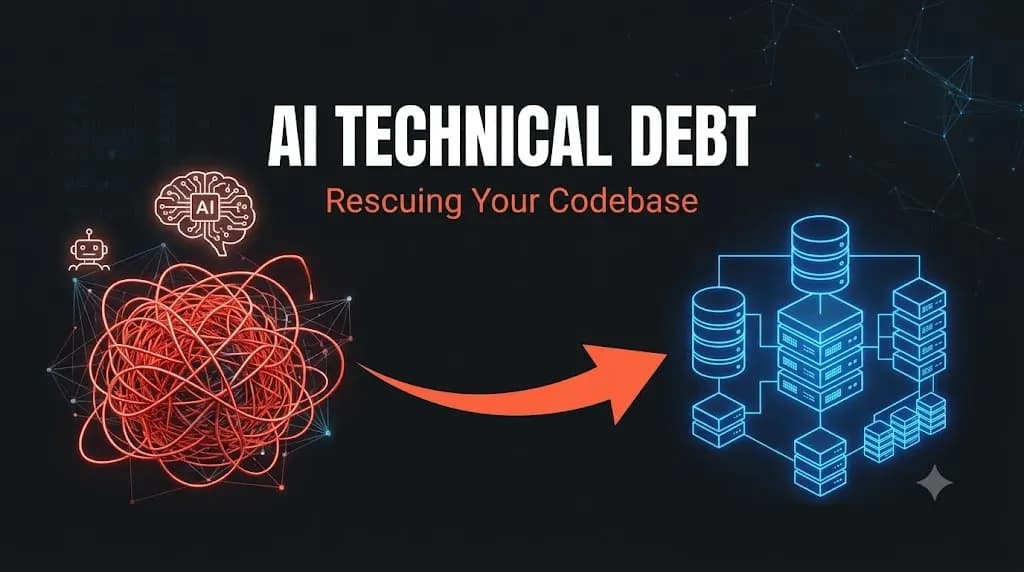
By relying heavily on tools like ChatGPT or GitHub Copilot without strict architectural oversight, your team has accumulated massive AI code technical debt. Your Minimum Viable Product (MVP) was built in record time. Your lead developer seemed like a wizard, pushing out complex features in days instead of weeks. You launched, acquired your first thousand […]