Stop Paying for Junk Leads: The Engineering Behind Custom React Forms API Validation
Datronix · October 2026 · 10 min read
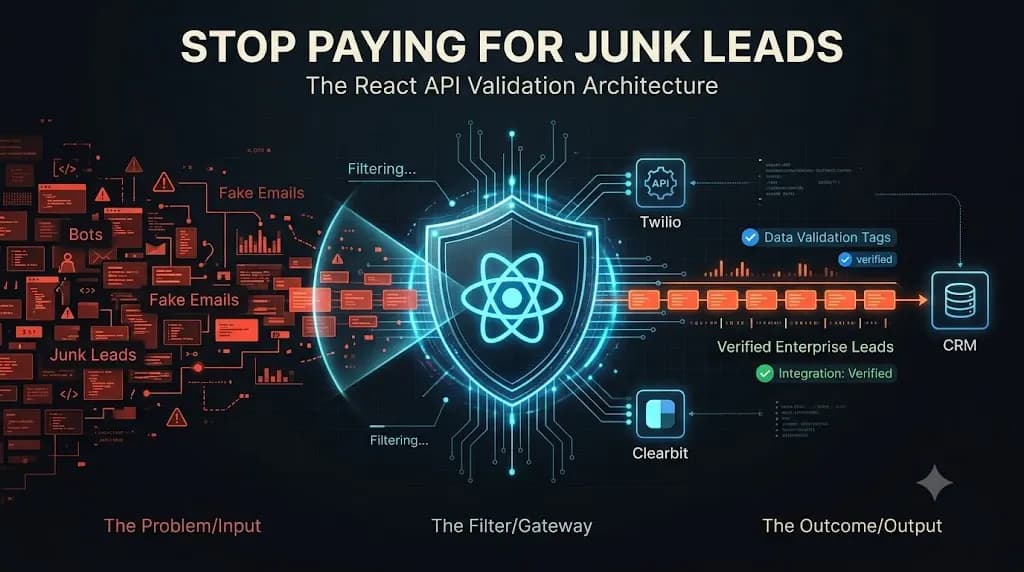
When you rely on basic, off-the-shelf WordPress forms or standard HTML inputs, you are rolling out the red carpet for bots, unmotivated browsers, and unqualified traffic. To protect your pipeline and scale your revenue, you must implement custom React forms API validation.
It is a Tuesday morning, and the tension in your weekly revenue meeting is palpable.
Your Chief Marketing Officer is thrilled. They just presented a report showing that the new $10,000/month Google Ads campaign generated 500 leads at a record-low Cost Per Lead (CPL). The marketing team is celebrating a massive win.
Then, the VP of Sales speaks up.
“The leads are garbage,” they say, sliding a printed spreadsheet across the table. “My Sales Development Reps (SDRs) spent 40 hours this week dialing numbers. Half of them are disconnected. Twenty of them are ‘123-456-7890’. Another fifty are college students using @gmail.com addresses who have zero budget for our enterprise software.”
The marketing team did their job—they drove traffic and got the conversion. But the business is bleeding cash. Not only did you waste $10,000 on clicks, but you are actively burning thousands of dollars in wasted sales payroll. Even worse, your top SDRs are demoralized, spending their days leaving voicemails for “Mickey Mouse.”
If this scenario sounds familiar, your problem isn’t your ad targeting, and it isn’t your sales team’s closing ability. The problem is your digital front door.
Here is the definitive, elite engineering deep-dive into why standard forms are destroying your business, how junk leads actively poison your Google Ads algorithm, and the exact React/Node.js architecture we use at Datronix Tech to physically prevent bad data from ever reaching your CRM.
The Bleeding Neck: Why Standard HTML Forms Fail at Scale
To fix the leak, we must first understand why traditional lead capture forms are fundamentally incapable of protecting an enterprise sales pipeline.
If you are using Gravity Forms, Contact Form 7, or a generic HubSpot embed, your validation is happening purely at the surface level.
1. The Regex Illusion
Standard forms use basic HTML5 validation or simple JavaScript Regular Expressions (Regex). If a user types test@test.com, the form simply checks if the string contains an @ symbol and a domain extension. It passes the Regex test, the form submits, and your sales team is handed a completely useless lead.
The same applies to phone numbers. A basic form checks if the input contains 10 digits. 000-000-0000 is 10 digits. The form accepts it.
2. The Algorithmic Death Spiral (Poisoning the Pixel)
The cost of a fake lead goes far beyond wasted SDR time. In 2026, Google Ads and Meta Ads operate almost entirely on machine learning.
When a user types “Mickey Mouse” into your form and clicks submit, your “Thank You” page loads. The Google Ads conversion pixel fires. It tells Google’s AI: “This is the exact type of user we want! Go find more people exactly like this!”
Google’s algorithm doesn’t know the lead was fake. It just knows it successfully drove a conversion. It then optimizes your $10,000 budget to aggressively target more low-intent, unqualified users. You enter an algorithmic death spiral. The more fake leads you accept, the worse your ad targeting becomes.
(This is precisely why we champion Server-Side Tracking Architecture to ensure only highly qualified, scrubbed data is fed back to the advertising platforms).
The Tourniquet: Architecting Custom React Forms API Validation
To stop the bleeding, you must transition from passive data collection to active data interrogation.
We do not use pre-built form plugins for enterprise B2B clients. We completely decouple the lead capture experience from the CMS. We engineer highly interactive, bespoke applications using React or Next.js.
By implementing custom React forms API validation, we intercept the user’s keystrokes in milliseconds, querying global databases to verify their identity and intent before the “Submit” button ever becomes clickable.
Here is the four-pillar technical blueprint for building an impenetrable B2B lead funnel.
Pillar 1: The Multi-Step React Architecture
Before we validate the data, we must capture the user’s attention. A massive, intimidating 10-field HTML form will scare away your best prospects—the busy CEOs and VPs who don’t have time for data entry.
Instead, we engineer dynamic, multi-step React components. We utilize state management (like Zustand or React Context) to guide the user through a frictionless, conversational flow.
- Step 1: We ask a low-friction, multiple-choice question. “What is your biggest operational bottleneck?” (Clickable buttons).
- Step 2: “What is your current monthly ad spend?” (Clickable buttons).
By the time the user reaches the final step (Name, Email, Phone), they have invested micro-commitments. The psychological principle of “sunk cost” kicks in, drastically increasing the completion rate for highly intentful users.
Pillar 2: Real-Time Phone and Email Carrier Validation
This is where the true power of custom React forms API validation is unleashed. When the user reaches the contact information step, we do not rely on Regex. We ping external verification APIs in real-time.
1. Phone Number Interrogation (Twilio Lookup API): When the user types their phone number, our React frontend sends a secure request to our Node.js backend, which instantly pings the Twilio Lookup API.
- Does this phone number actually exist?
- Is it a valid carrier?
- Is it a high-risk VOIP number (often used by spam bots and offshore lead generators)?
If the API returns a “Line Type: VOIP” or an invalid status, the React form instantly displays an inline error: “Please provide a valid, direct mobile or office line.” The Submit button remains locked.
2. Email SMTP Handshake (ZeroBounce / NeverBounce): When the user enters their email, we do not just check for an @ symbol. We ping an email validation API. The API reaches out to the user’s mail server and performs an invisible SMTP handshake.
- Does this inbox exist?
- Is this a known “Catch-All” or “Disposable” spam email address?
- Did they misspell the domain (e.g.,
user@gamil.cominstead ofgmail.com)?
If the inbox doesn’t exist, the form halts the user.
(Engineering Note: To prevent API rate-limit exhaustion and massive bills, our developers implement strict Debouncing logic in React. The API call is only triggered after the user stops typing for 500 milliseconds, ensuring we only validate complete inputs).
Pillar 3: B2B Enrichment and Disqualification (Clearbit)
For enterprise B2B sales, “real” data isn’t enough. You need “qualified” data. If you only sell software to companies making over $5M in revenue, a legitimate lead from a tiny startup is still a waste of your sales team’s time.
We integrate deep B2B enrichment APIs, such as Clearbit or ZoomInfo, directly into the custom React forms API validation pipeline.
- The user types their work email:
j.smith@acmecorp.com. - Our backend pings Clearbit with the domain
acmecorp.com. - In milliseconds, Clearbit returns the company size, industry, technology stack, and estimated revenue.
The Routing Logic: Because the form is built in React, we can conditionally route the user based on the API response.
- If the API confirms Acme Corp has $50M in revenue, the form succeeds. We instantly route the user to a calendar booking page to speak directly with an Account Executive. We pass the enriched data (revenue, industry) directly into your CRM (Salesforce/HubSpot).
- If the API confirms Acme Corp is a 1-person company, the form still succeeds, but we route them to a generic “Thank You, we will be in touch” page. The lead is tagged as “Unqualified” and routed to an automated email sequence, completely protecting your Account Executive’s calendar.
Pillar 4: Secure Server-Side Architecture (Next.js)
A critical mistake amateur developers make when attempting custom React forms API validation is placing the API keys directly in the frontend React code. If you expose your Clearbit or Twilio API keys in the client-side JavaScript bundle, malicious actors will scrape them and drain your API budget in hours.
At Datronix Tech, we architect these forms using Next.js Server Actions or a decoupled Node.js API middleware layer.
The React frontend simply passes the raw string (the phone number) to your secure backend. The backend, holding the hidden environment variables, communicates with Twilio, interprets the result, and returns a simple boolean (True/False) to the frontend. Absolute security, zero exposed keys.
(If you are currently relying on fragile Zapier connections to manage this data flow, read our breakdown on Building Custom Web Apps to Replace Software Glue).
The Hard Financial ROI of API Validation
Building a custom React application for your lead generation requires a higher initial capital expenditure (CapEx) than installing a free WordPress plugin. However, for a business spending over $5,000 a month on paid acquisition, the operational ROI is staggering and immediate.
1. Reclaiming Hundreds of SDR Hours
According to industry benchmarks, a B2B sales rep spends up to 20% of their week researching leads, dialing bad numbers, and leaving voicemails for unqualified prospects. By physically blocking bad data at the front door, your SDRs reclaim an entire day of productivity every week. You are no longer paying your $80,000/year sales staff to act as manual data validators.
2. Rescuing Your Google Ads Budget
As mentioned earlier, algorithmic bidding is a double-edged sword. By implementing custom React forms API validation, only verified, qualified humans are allowed to trigger the Google Ads conversion tag. Within 30 days, Google’s machine learning realizes that your ideal customer profile is highly specific. Your Cost Per Qualified Lead drops dramatically, multiplying your Return on Ad Spend (ROAS).
3. Elevating Brand Equity
In the elite B2B space, the user experience dictates brand perception. A lightning-fast, multi-step React form that instantly catches a typo in an email address (“Did you mean @gmail.com?”) feels premium. It signals to a high-ticket prospect that your company operates on superior technological infrastructure.
(We utilize this exact same React component methodology when building highly interactive Shopify Custom Bundle Apps for e-commerce clients).
Conclusion: Stop Treating Your Funnel Like a Dumpster
Your CRM is the central nervous system of your business. If you allow unvalidated, unverified data to flow freely into it, you are slowly poisoning your entire organization. Your marketing data becomes skewed, your ad algorithms become confused, and your sales team becomes exhausted.
By transitioning to a decoupled architecture and leveraging the power of custom React forms API validation, you transform your digital front door from a passive net into an active, intelligent bouncer.
You dictate who enters your pipeline. You dictate the quality of your data.
It is time to stop apologizing to your sales team for junk leads. It is time to engineer a bulletproof funnel.
(Note: When scoping custom React applications, API middleware, and CRM integrations, all Datronix Tech B2B service proposals natively include the requisite 18% GST charge, ensuring complete financial transparency from the initial audit to final deployment).
Are you bleeding ad spend on disconnected phone numbers and unqualified leads?
👉 Get an Ad Waste & Pipeline Audit. Do not spend another $10,000 on Google Ads until you secure your front door. Let our senior engineers audit your current lead capture process, map the API integrations you need (Twilio, Clearbit), and provide a clear roadmap to build an impenetrable React funnel.
Schedule your strategic technical review today and let’s arm your sales team with perfect data.
Related Posts
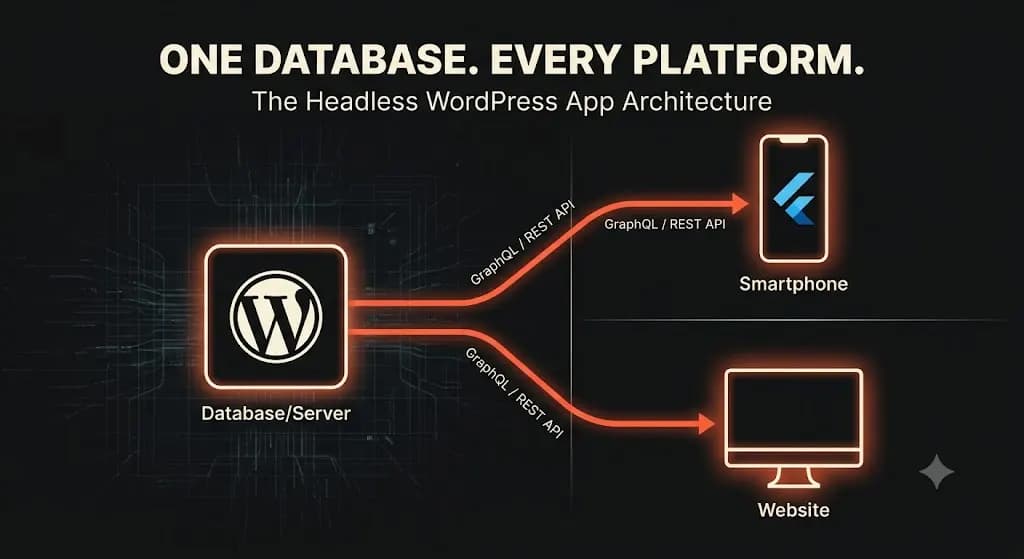
Turning Your WordPress Site into a Native Mobile App: The Headless API Architecture
Here is the definitive, elite engineering playbook on how we build a Headless WordPress mobile app that allows your team to publish once, and instantly update everywhere. It is a conversation that happens in boardrooms of scaling media companies, massive e-commerce retailers, and high-traffic directory sites every day. The CEO says, “Our mobile traffic is […]
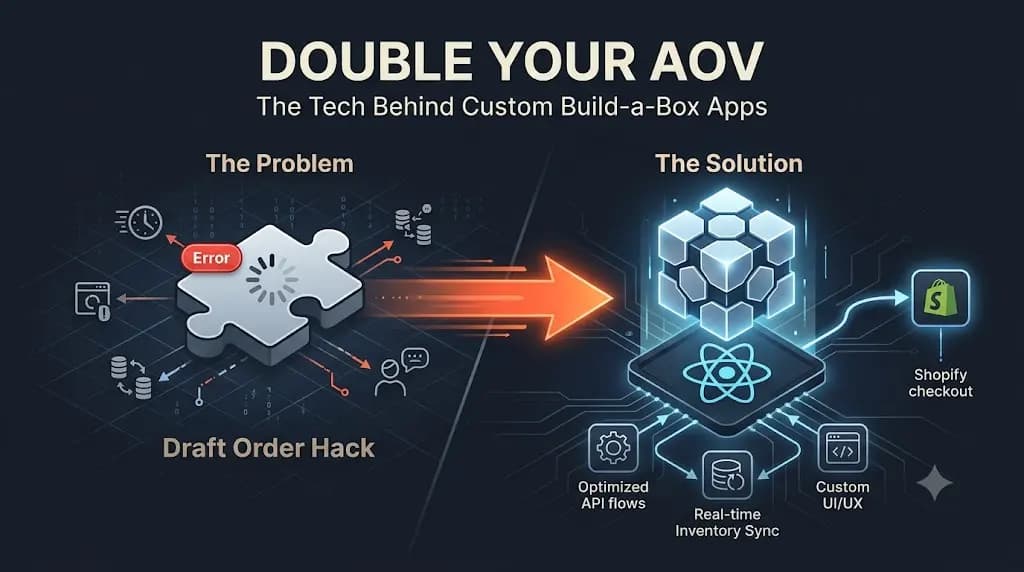
Shopify Custom Bundle Apps: The Engineering Blueprint for Doubling Average Order Value
If you are trapped in this technical bottleneck, you are not alone. Off-the-shelf software is designed for generic use cases, not complex, branded merchandising. To scale beyond these limitations and unlock massive revenue growth, elite brands are investing in bespoke Shopify custom bundle apps. It is a scenario playing out at the highest levels of […]