The $100k Mistake: Why Most B2B Mobile Apps Should Be PWAs
Datronix · September 2026 · 5 min read
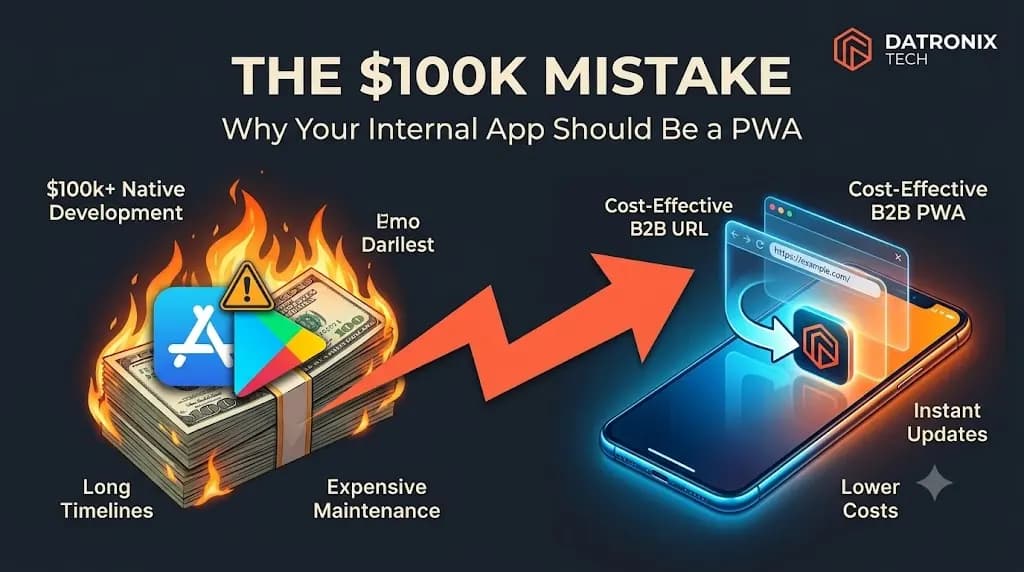
The truth is, building B2B Progressive Web Apps (PWAs) will do the job 95% as well, for a fraction of the initial cost and long-term maintenance overhead.
Every week, we speak with Product Managers and Founders who are ready to write a $100,000 check. They want to build dedicated, native iOS and Android applications for their internal field teams, vendor portals, or B2B platforms.
Our first question is almost always: “Why?”
The answer is usually rooted in vanity or a misunderstanding of modern web capabilities. They want their logo on the user’s home screen. They want push notifications. They think “native” is the only way to achieve a premium feel.
Unless your B2B tool absolutely requires deep, complex hardware integration, building two separate codebases and fighting with App Store reviews is massive overkill. Here is why forward-thinking CTOs are ditching native builds for highly optimized PWAs in 2026.
The “Native App” Vanity Trap
When scoping how to choose the right tech stack for an internal product, many PMs default to native development. But they severely underestimate the friction involved.
- The Friction of Codebases: You aren’t just building one app; you are building two (Swift for iOS, Kotlin for Android), or wrestling with heavy cross-platform frameworks.
- The Friction of Approvals: Imagine finding a critical bug in your internal inventory management app on a Friday. With a native app, you must submit the fix to Apple and wait days for App Store approval just so your warehouse staff can do their jobs.
- The Friction of Adoption: You are forcing enterprise vendors or internal staff to manually go to an app store, download a heavy file, and constantly update it.
This friction is unnecessary.
What Are B2B Progressive Web Apps?
At its core, a Progressive Web App is a website built with modern web technologies (HTML, CSS, JavaScript) that looks, feels, and acts exactly like a native mobile app.
Supported heavily by Google (see web.dev’s official PWA documentation), a PWA runs in a browser but can be “installed” directly to a user’s home screen, complete with a custom icon. It hides the browser URL bar, delivering a seamless, immersive, full-screen experience.
4 Proven Reasons PWAs Dominate B2B Workflows
If you are building tools for utility rather than consumer entertainment, B2B Progressive Web Apps offer unbeatable advantages.
1. The App Store Bypass (Instant Updates)
This is the ultimate operational advantage. Because a PWA is fundamentally a web application, you completely bypass the Apple App Store and Google Play Store. When you deploy a bug fix or a new feature to your server, every single user gets the update instantly upon their next load. There are no “version mismatches” among your workforce.
2. Radical Cost Efficiency
You build one single, maintainable web codebase. You don’t need to hire a dedicated iOS developer and a dedicated Android developer. Your existing JavaScript/React web team can build and maintain the PWA, drastically reducing your initial CapEx and ongoing OpEx. This is the cornerstone of intelligent custom software development.
3. Offline Capabilities via Service Workers
A common myth is that web apps stop working when you lose Wi-Fi. Modern PWAs utilize “Service Workers” scripts that run in the background. They cache your app’s core files and data. If a field technician goes into a basement with zero cell service, the PWA will still load, allow them to input data, and automatically sync with your database the moment their connection is restored.
4. Seamless Distribution
Getting a B2B partner to download an app is hard. With a PWA, you simply send them a URL or a QR code. They open the link, click “Add to Home Screen,” and the installation is complete in two seconds without ever touching an app store.
When Do You Actually Need a Native App?
At Datronix Tech, we love building complex, high-performance native mobile apps. We just refuse to sell you one when a robust PWA will suffice.
However, you should go native (or use a framework like Flutter) if your app requires:
- Continuous, heavy background location tracking.
- Complex Bluetooth Low Energy (BLE) connections to external hardware.
- Intensive 3D rendering or custom canvas animations.
- Geofencing capabilities (Apple restricts this heavily on web apps).
(If you are debating frameworks for a required native build, read our breakdown on Flutter vs React Native in 2026).
Conclusion: Build for Utility, Not Vanity
Are you scoping a new mobile tool for your workforce or B2B vendors? Stop and ask if you are solving for vanity or utility.
B2B Progressive Web Apps deliver the app-like icon, the offline capabilities, and the instant deployment your business needs, without the $100k native price tag. It is time to stop building heavy software when lean, modern architecture will scale your operations faster.
(Note: When scoping custom mobile and web architectures, all Datronix Tech B2B service proposals natively include the requisite 18% GST charge, ensuring complete financial transparency from the initial audit to final deployment).
Ready to stop overpaying for internal apps?
👉 Contact Datronix Tech for an Enterprise Architecture Consultation. We specialize in auditing startup requirements and building lean, highly scalable PWA and native solutions.
Schedule your strategic technical review today and let us build exactly what you need nothing more, nothing less.
Related Posts
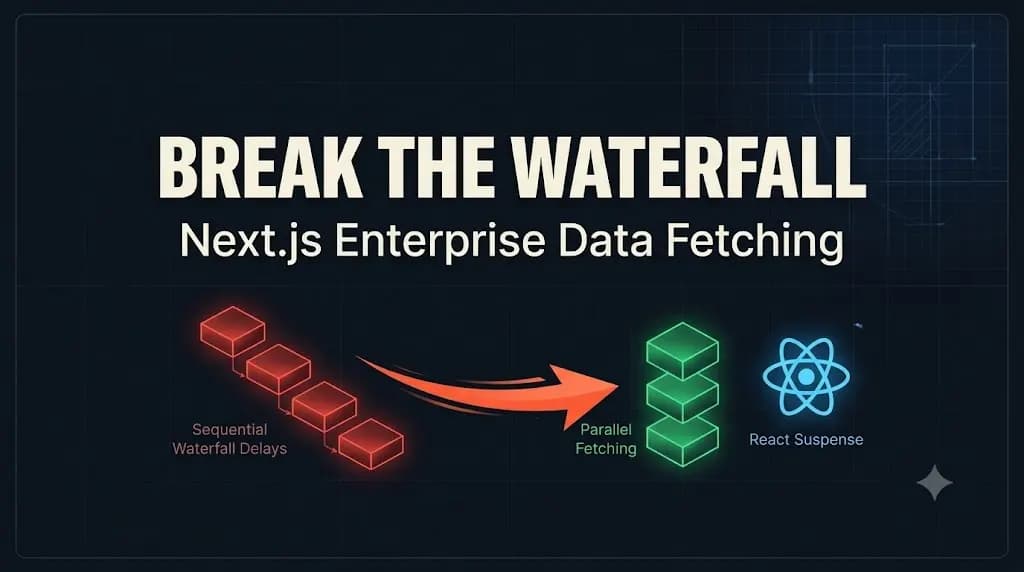
5 Proven Fixes for Next.js App Router Waterfalls
If this sounds familiar, your application is likely a victim of a Next.js App Router waterfall. It is the most frustrating paradox in modern web development. Your engineering team spent three months migrating your enterprise application from the old Pages Router to the new App Router. You adopted React Server Components (RSC) to ship less […]

Flutter vs. React Native in 2026: Why You Are Choosing Based on the Wrong Constraints
Inevitably, the CTO or Technical Founder falls down the Reddit rabbit hole, attempting to definitively answer the question: Flutter vs React Native? It is a conversation that happens in boardrooms and Slack channels every single day. A pre-Series A startup needs to ship mobile applications for iOS and Android simultaneously. They don’t have the runway […]