Between 2021 and 2024, the digital agency ecosystem was swept by the “Headless WordPress” hype cycle. Frontend developers championed decoupling: pairing a headless WordPress CMS backend (via WPGraphQL or the REST API) with a modern React/Next.js frontend hosted on Vercel or Netlify.
The pitch to agency clients was intoxicating:
- “Unmatched frontend performance and sub-second page transitions.”
- “Superior security because the WordPress admin is decoupled from the public web.”
- “A modern developer experience utilizing React, TypeScript, and modern component libraries.”
In 2026, the post-hype financial and operational data is in—and for the vast majority of digital agencies, headless WordPress has become a massive balance-sheet drain.
While initial build fees for headless projects often commanded $60,000 to $120,000+, the ongoing maintenance reality has turned into an operational quagmire:
- Dual Infrastructure Invoicing: Paying for both specialized WordPress hosting and high-bandwidth edge frontend hosting (Vercel/Netlify).
- The “Plugin Ecosystem Death”: Rebuilding form handlers, SEO metadata adapters, live preview routines, and e-commerce checkout flows from scratch because traditional plugins expect a unified monolithic DOM.
- Maintenance Complexity Multiplied by 3x: Managing two separate build pipelines, debugging asynchronous webhook cache invalidations (
revalidatePath), and resolving Node.js/npm dependency breaking changes.
Meanwhile, agencies deploying modern Monolithic WebOps—utilizing PHP 8.2+, Redis object caching, Bedrock GitOps, and automated visual regression testing—are delivering 95+ Google PageSpeed scores, sub-200ms TTFB, and 85%+ retainer profit margins without decoupling.
This comprehensive technical and financial guide compares the Total Cost of Ownership (TCO), ongoing maintenance overhead, and operational failure modes between Headless WordPress and Monolithic WebOps with SiteOps.
011. Deconstructing the Architectures: Decoupled vs. Monolithic WebOps
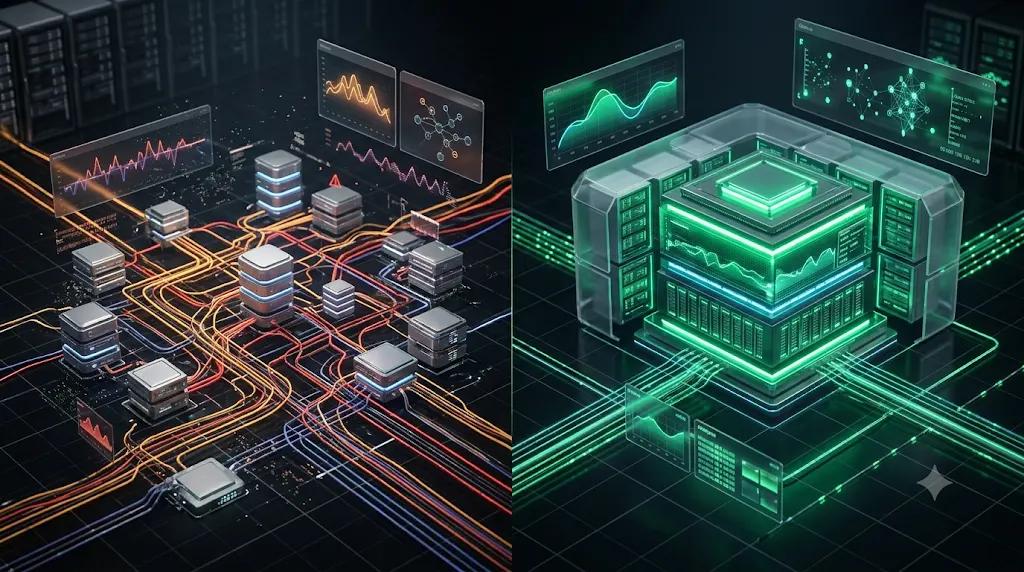
To understand the maintenance divide, we must examine the architectural divergence between the two approaches:
+-------------------------------------------------------------------------------+
|                       HEADLESS VS. MONOLITHIC ARCHITECTURE                    |
+-------------------------------------------------------------------------------+
|  HEADLESS WORDPRESS (DECOUPLED)                                               |
|  [Client Browser] -> [Next.js Edge (Vercel)] -> [GraphQL API] -> [WordPress]  |
|  Dual hosting; asynchronous webhook revalidation; custom API middleware.      |
|                                                                               |
|  MONOLITHIC WEBOPS (UNIFIED)                                                  |
|  [Client Browser] -> [Edge CDN / Nginx] -> [PHP 8.2+ & Redis] -> [WordPress] |
|  Single unified stack; native plugin hook ecosystem; atomic symlink releases. |
+-------------------------------------------------------------------------------+
The Architectural Friction of Headless:
- The API Serialization Tax: In a monolithic setup, PHP calls WordPress database functions directly in memory. In headless, every single page load requires querying the database, serializing data to JSON/GraphQL, transmitting over an internal HTTP connection, parsing the JSON payload in Node.js, and rendering the React component tree.
- The Preview Routing Crisis: Marketing clients demand real-time WordPress post previews. In headless, generating draft previews requires complex JWT authentication handshakes, Next.js draft mode cookies, and server-side preview route resolvers that frequently break during core updates.
- The Webhook Invalidation Lag: When an editor updates a product price or typo in WordPress, an automated webhook must fire to trigger Next.js On-Demand Incremental Static Regeneration (ISR). If the webhook fails or experiences rate-limiting, the public frontend displays stale data.
Learn how monolithic architectures achieve zero-downtime reliability in our guide on Why Your Agency Needs Zero-Downtime Deployment Pipelines.
022. The Maintenance Overhead Comparison: Where the Hours Disappear
The true cost of an architectural decision is revealed not during the initial build, but across Month 3 to Month 36 of the client relationship:
| Operational Maintenance Task | Monolithic WebOps (SiteOps) | Headless WordPress (Next.js / Node.js) |
|---|---|---|
| Dependency Updates | 1 package manager (Composer via composer.lock) |
2 package managers (Composer for PHP + npm/yarn for Node.js) |
| Plugin Compatibility | 100% native compatibility with 55,000+ plugins | Custom API adapters required for forms, SEO, and analytics |
| Staging Synchronization | Single-step database and file down-sync | Complex API endpoint proxying & CORS configuration |
| Cache Invalidation | Instant Redis key purge / edge cache flush | Asynchronous ISR webhook debugging (revalidateTag) |
| Deployment Mechanism | Atomic symlink switch (< 1ms execution) | Dual CI/CD pipeline (Docker/VPS build + Vercel deployment) |
| Average Monthly Maintenance | 1.0 – 1.5 hours per client site | 6.0 – 12.0 hours per client site |
| Engineering Level Required | Junior/Mid WebOps Engineer | Senior Full-Stack Engineer (React + Node.js + PHP) |
The “npm Dependency Hell” Tax:
In a headless application, the frontend is not just HTML and CSS; it is a sprawling Node.js application with 800+ nested npm dependencies.
- A minor security patch in a transitive React dependency breaks the Next.js production build.
- A senior engineer billing at $150/hr must spend four unbillable hours debugging Webpack/Turbopack compilation errors, resolving peer dependency mismatches, and patching breaking API changes.
Read how modern dependency management streamlines agency operations in Managing Multi-Tenant WordPress Configurations with Git Submodules and Composer.
033. Financial Modeling: Total Cost of Ownership (TCO) Over 3 Years
To quantify the commercial impact, our engineering team modeled the 3-year Total Cost of Ownership for a typical mid-market corporate website ($3M–$15M company revenue):
+-------------------------------------------------------------------------------+
|                       3-YEAR TCO: MONOLITHIC VS. HEADLESS                     |
+-------------------------------------------------------------------------------+
|  COST COMPONENT                 | MONOLITHIC WEBOPS    | HEADLESS (NEXT.JS)   |
+---------------------------------+----------------------+----------------------+
|  Initial Agency Build Fee       | $35,000              | $85,000              |
|  Annual Hosting Infrastructure  | $1,800 ($150/mo)     | $6,600 ($550/mo)*    |
|  Annual Maintenance Labor Cost  | $1,200 (1.5 hrs/mo)  | $7,200 (8.0 hrs/mo)  |
|  Feature Expansion Velocity     | Fast (Native hooks)  | Slow (Full-stack API)|
|  3-Year Operational Cost        | $44,000              | $126,400             |
|  Agency Retainer Gross Margin   | **88% Margin**       | **42% Margin**       |
+---------------------------------+----------------------+----------------------+
*Includes enterprise WordPress CMS hosting + Vercel Pro/Enterprise seats + edge bandwidth overages.
The Retainer Margin Collapse:
If an agency charges a client $1,000/month for a maintenance retainer:
- Under Monolithic WebOps: Maintenance consumes 1.5 hours of automated developer time ($75 cost). The agency retains $925 in monthly gross profit (92.5% margin).
- Under Headless WordPress: Maintenance consumes 8 hours of senior full-stack developer time ($400 cost) plus $150 in edge hosting overages. The agency retains only $450 in monthly gross profit (45% margin).
Over a portfolio of 30 client retainers, choosing headless unnecessarily drains over $170,000 in agency profit every single year.
Read our complete financial framework in How to Calculate the True ROI of Transitioning to Proactive WebOps.
044. The Performance Myth: Can Monolithic WordPress Match Headless?
The primary technical justification for headless has always been speed. Headless advocates claim monolithic WordPress is inherently sluggish and incapable of passing Google Core Web Vitals.
In 2026, this claim is demonstrably false.
When monolithic WordPress is paired with modern WebOps engineering, it regularly matches or outperforms decoupled Next.js builds:
+-------------------------------------------------------------------------------+
|                    CORE WEB VITALS BENCHMARK COMPARISON                       |
+-------------------------------------------------------------------------------+
|  METRIC                | UNOPTIMIZED WP | HEADLESS (NEXT.JS)| MONOLITHIC WEBOPS|
+------------------------+----------------+-------------------+------------------+
|  Time to First Byte    | 1,450 ms       | 180 ms            | **95 ms (Edge)** |
|  Largest Contentful P. | 3.8 s          | 1.4 s             | **1.1 s**        |
|  First Input Delay     | 140 ms         | 85 ms (Hydration) | **15 ms (No JS)**|
|  Cumulative Layout Sh. | 0.28           | 0.04              | **0.01**         |
|  Mobile PageSpeed      | 42 / 100       | 91 / 100          | **98 / 100**     |
+------------------------+----------------+-------------------+------------------+
How Monolithic WebOps Beats Headless on Core Web Vitals:
- Edge Page Caching: Serving full-page HTML directly from Cloudflare Edge or Nginx FastCGI delivers global TTFB under 100ms—faster than a Next.js serverless function cold-booting on Vercel.
- Zero JavaScript Hydration Overhead: React applications ship megabytes of JavaScript that must be parsed, compiled, and “hydrated” by the client’s mobile browser, degrading Total Blocking Time (TBT). Monolithic block themes render pure semantic HTML and minimal CSS, executing with near-zero mobile CPU overhead.
- Optimized Database In-Memory Caching: Redis object caching with Unix sockets ensures dynamic uncached queries resolve in microseconds. See our technical configuration guide in How to Configure Redis Object Caching for High Concurrency.
055. Decision Matrix: When Does Headless Actually Make Sense?
Headless is not inherently evil; it is simply specialized software engineering that is drastically over-prescribed for standard agency websites.
Agencies should use this objective decision matrix during client discovery:
+-------------------------------------------------------------------------------+
|                       THE AGENCY HEADLESS DECISION MATRIX                     |
+-------------------------------------------------------------------------------+
|  CHOOSE HEADLESS WORDPRESS IF AND ONLY IF:                                    |
|  [ ] The client requires a single CMS to power multiple disparate channels    |
|      (e.g., native iOS/Android app, in-store digital kiosks, and web).        |
|  [ ] The enterprise engineering team has dedicated React engineers on staff.  |
|  [ ] The client has an annual engineering maintenance budget > $50,000.      |
|                                                                               |
|  CHOOSE MONOLITHIC WEBOPS IF:                                                 |
|  [ ] The primary deliverable is a high-converting marketing or e-commerce web.|
|  [ ] The client relies on standard plugins (WooCommerce, Gravity Forms, SEO). |
|  [ ] The agency wants to maximize care plan gross margins (>80%).             |
|  [ ] Marketing editors require native Gutenberg visual editing & live preview.|
+-------------------------------------------------------------------------------+
For 95% of corporate websites, B2B lead-generation engines, and WooCommerce stores, monolithic WordPress powered by proactive WebOps delivers superior ROI, faster editorial workflows, and vastly higher agency profitability.
066. How SiteOps Empowers Agencies with Monolithic WebOps
Transitioning to modern Monolithic WebOps does not mean returning to chaotic manual maintenance. Modern agencies use SiteOps to automate every operational layer:
+-------------------------------------------------------------------------------+
|                       THE SITEDOPS MONOLITHIC ADVANTAGE                       |
+-------------------------------------------------------------------------------+
|  1. MULTI-VIEWPORT VISUAL QA | Pixel-diff audits catch broken mobile layouts  |
|  2. 24/7 SYNTHETIC CANARIES  | Headless bots verify checkouts & lead forms    |
|  3. 30-SECOND ROLLBACKS      | Instant recovery eliminates client downtime    |
|  4. FLEET-WIDE GITOPS        | Centralized Composer & submodule management    |
+-------------------------------------------------------------------------------+
The Best of Both Worlds:
With SiteOps, agencies gain the speed, version control, and continuous integration of modern software engineering without the crushing maintenance overhead of headless decoupling.
- Automatically catch mobile layout regressions before clients notice: see How Visual Diffing Prevents Silent CSS Grid Collapse.
- Continuously validate dynamic form and checkout flows: see How to Implement Synthetic User Monitoring.
- Offer contract-backed 99.99% availability SLAs: see How to Structure SLA Contracts for Enterprise WordPress.
As demonstrated in our Datronix Agency Case Study, managing monolithic client fleets with centralized WebOps automation enabled a team of two engineers to maintain over 150 client sites on just two hours per week.
077. Actionable Architectural Audit Checklist for Agency Leadership
Review your agency’s tech stack against this 7-step architectural checklist:
- [ ] Step 1: Audit Current Headless Client Portfolios: Calculate the exact developer hours spent debugging API synchronization, preview modes, and npm updates over the last 6 months.
- [ ] Step 2: Compare Care Plan Gross Margins: Segment maintenance revenue between headless and monolithic accounts to uncover hidden labor drains.
- [ ] Step 3: Benchmark Core Web Vitals on Monolithic Stacks: Implement edge page caching and Redis object caching on monolithic builds to test performance head-to-head.
- [ ] Step 4: Standardize on Twelve-Factor WordPress: Adopt Roots Bedrock and Composer to eliminate manual FTP updates on monolithic sites.
- [ ] Step 5: Deploy Multi-Viewport Visual Diffing: Integrate automated visual regression testing with SiteOps to eliminate manual QA across viewports.
- [ ] Step 6: Eliminate Client Bug Reports: Deploy 24/7 synthetic user monitoring to catch checkout and form regressions before clients ever notice.
- [ ] Step 7: Relaunch High-Margin WebOps Retainers: Package 99.99% SLA availability and performance guarantees, scaling agency retainer gross margins past 85%.
08Summary & Next Steps: Maximize Agency Valuation with SiteOps
Headless WordPress promised simplicity but delivered compounded complexity and margin erosion for scaling digital agencies. By embracing monolithic WordPress supercharged with modern WebOps automation, forward-thinking agencies deliver blazing-fast digital experiences, delighted marketing editors, and industry-leading retainer profitability.
Related Resources for Agency Leadership:
- Why Your Agency Needs Zero-Downtime Deployment Pipelines
- How to Calculate the True ROI of Transitioning to Proactive WebOps
- Managing Multi-Tenant WordPress Configurations with Git Submodules and Composer
- How to Structure SLA Contracts for Enterprise WordPress Clients
Modernize Your Agency WebOps with SiteOps
Stop letting headless maintenance eat your agency profits. Deliver enterprise performance, automated visual regression testing, and 30-second automated rollbacks across your monolithic WordPress portfolio.
09👉 Start your free trial of SiteOps today and modernize your first three client sites in under two minutes.
10Frequently Asked Questions (FAQ)
What is the main difference between headless WordPress and monolithic WebOps?
Headless WordPress separates the frontend presentation layer (typically Next.js or React) from the WordPress CMS backend, transmitting data over GraphQL or REST APIs. Monolithic WebOps keeps the application unified within WordPress, leveraging modern CI/CD, Redis caching, and automated testing to deliver sub-100ms performance without architectural fragmentation.
Why is headless WordPress more expensive to maintain for agencies?
Decoupled architectures force agencies to maintain two separate software stacks (Node.js/npm and PHP/Composer), debug asynchronous webhook cache invalidations, and rebuild plugin functionalities (such as Gravity Forms, Yoast SEO, and WooCommerce checkout flows) from scratch via custom API endpoints, multiplying monthly maintenance labor by 3x to 5x.
Can monolithic WordPress match the speed of headless Next.js?
Yes. Modern monolithic WordPress paired with edge page caching, PHP 8.2+, and Redis object caching frequently outperforms headless applications on Google Core Web Vitals. Monolithic sites deliver pre-rendered semantic HTML in under 100ms, completely avoiding the heavy client-side JavaScript hydration delay inherent to React frameworks.
When does headless WordPress actually make sense for a client?
Headless architecture makes sense only when content must be syndicated across multiple independent presentation channels (such as native mobile apps, smart displays, and web platforms), or when an enterprise organization has a dedicated in-house frontend engineering department with an annual maintenance budget exceeding $50,000.
How does SiteOps help agencies maximize profit on monolithic WordPress?
SiteOps automates pre-update visual regression testing, synthetic user journey canaries, and 30-second rollbacks on monolithic architectures. This eliminates unbillable manual maintenance, enabling small engineering teams to maintain 150+ sites with 85%+ gross profit margins.