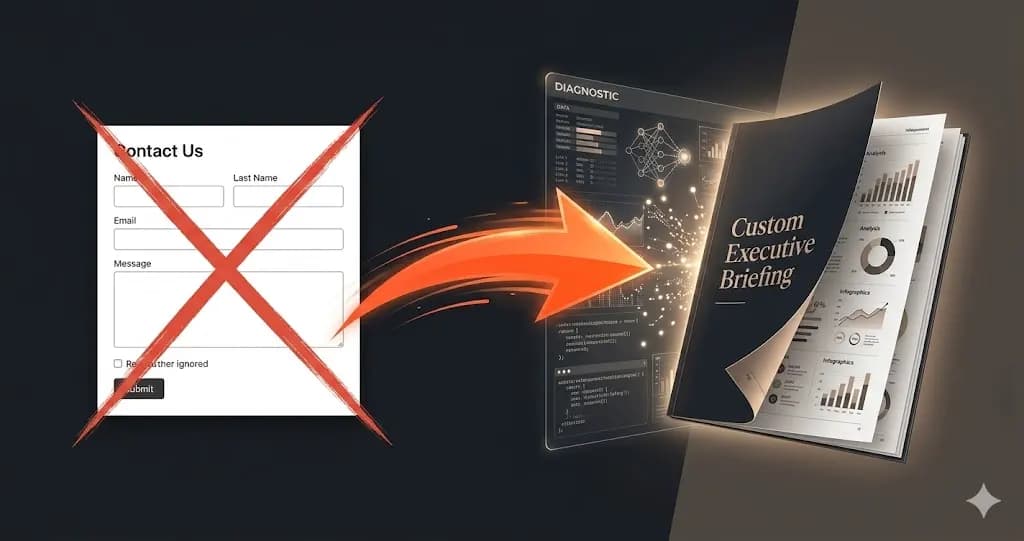
If you want to capture high-ticket, C-Suite leads, you have to offer immediate, bespoke value in exchange for their data. To do this, elite B2B brands are abandoning the standard contact page and building highly sophisticated, enterprise-grade assessment tools.
You have a world-class B2B service. Your team is fully equipped to deliver a $100,000 consulting package that will fundamentally transform a client’s business. You drive expensive, highly targeted traffic to your landing page. But when an enterprise CEO or CTO finally arrives, the only call-to-action you offer them is a generic “Contact Us” form.
They immediately bounce.
Enterprise executives do not fill out generic contact forms. They are aggressively protecting their time and their inboxes. They do not want to “schedule a quick 15-minute discovery call” so an entry-level SDR can interrogate them about their budget.
By replacing your basic web forms with an interactive, multi-variable logic engine that generates a customized 10-page PDF report, you transition from “asking for a meeting” to “providing an executive briefing.” Here is the technical blueprint for building it.
The Bleeding Neck: Why the C-Suite Ignores You
The core failure of traditional B2B lead generation is asymmetrical value. You are asking a CTO to hand over their contact information and company details, but you are giving them absolutely nothing in return except the promise of a sales pitch.
In the enterprise space, data is currency. A standard form builder (like Gravity Forms or basic HubSpot embeds) signals a low-value transaction. It feels cheap. The executive assumes they will be dropped into a generic email drip campaign, so they refuse to engage.
To break this friction, your digital interface must reflect the high-fidelity nature of your actual consulting service. It requires custom web application development to build a diagnostic experience that proves your expertise before the sales call even begins.
The Tourniquet: Building the Assessment Engine
An enterprise-grade assessment tool is essentially a custom software application living on your website. It asks the executive a series of deep, strategic questions and instantly processes their answers through a proprietary logic engine.
Here is how to architect the backend to ensure it converts.
1. Multi-Variable Logic & Deep Data Capture
Instead of asking for a name and email upfront, the application starts with high-level operational questions.
Using a sleek, React or Next.js frontend, the user clicks through intuitive sliders and toggles: “What is your current monthly ad spend?” “Is your backend architecture monolithic or headless?” “What is your target customer acquisition cost?”
Because the interface is fast, frictionless, and highly relevant to their daily stress points, the executive becomes psychologically invested in seeing the results.
2. Dynamic PDF Report Generation
This is where the true value exchange happens. When the executive finally enters their work email to see their results, they don’t just get a generic “Thank You” screen.
The frontend fires a webhook to your Node.js or Python backend. The server runs the executive’s specific inputs against your proprietary consulting logic. It then dynamically generates a beautifully designed, 10-page PDF report.
This isn’t a static template. The document is custom-compiled in real-time. If the assessment was for a performance marketing audit, the PDF logic can dynamically calculate their optimal pricing tiers recommending specific base retainers versus percentage-of-spend models based on their stated budget and even automatically calculate the final projected costs, ensuring the requisite 18% GST is flawlessly applied to the quoted service figures.
The CEO receives an instant, highly accurate strategic roadmap, completely unique to their business.
3. Immediate, Data-Enriched CRM Routing
While the executive is reading their custom PDF, your sales team receives the ultimate intelligence briefing.
Through custom API middleware, the tool injects the lead into your CRM (Salesforce, HubSpot, etc.). But it doesn’t just pass along an email address; it passes the entire diagnostic profile. When your senior closer reaches out, they aren’t making a cold call. They are calling to discuss page 4 of the custom report the executive just generated.
Conclusion: Upgrade Your Value Exchange
If you are selling enterprise consulting, your digital footprint must operate at an enterprise level.
By replacing your “Contact Us” form with enterprise-grade assessment tools, you respect the C-Suite’s time. You provide immediate, automated, highly customized value that proves your competence. You stop begging for discovery calls and start printing pre-qualified, data-rich leads for your sales team.
Are you losing $100k deals because your lead capture is too generic?
👉 Book an Enterprise Lead Generation Strategy Call Let’s map out the proprietary logic and dynamically generated reports required to capture your ideal C-Suite client.